Enjoy conversations again,
even in a noisy room.
Do you struggle to hear in a noisy room, like a crowded restaurant? You’re not alone: this affects one third of people by the age of 40, and half by age 65. More than 800 million people. And as you likely know, hearing aids can’t help with this kind of hearing difficulty. We’re developing a first-in-class therapy that reverses the neurological root cause of this hearing deficit, so we can help put the joy back into the social interactions that no longer seem worth it and potentially even lower your risk of dementia.



Hearing aids don’t solve all hearing loss
When ears have a volume problem, we call that peripheral hearing loss. Hearing aids can handle it and the technology has continued to improve, resulting in better and better outcomes. But when the brain, not the ears, can no longer separate a voice from the noise around it, that's called central hearing loss. No treatment exists for this “cocktail party effect” hearing. People struggling with this end up withdrawing from conversations, then from their social life. And unfortunately, their dementia risk actually doubles. Hearing aids can’t treat this type of hearing loss because it is not an issue in the ear, but a processing challenge in the brain.
A novel therapy, not another hearing aid
Parley has created Localized Oligodendrocyte Optimization Therapy (LOOT), a 30-day combination of targeted audio stimulation with a repurposed, previously FDA-approved oral medication. Together, they prompt the brain to repair the myelin sheaths in the auditory brainstem that have worn down with age.
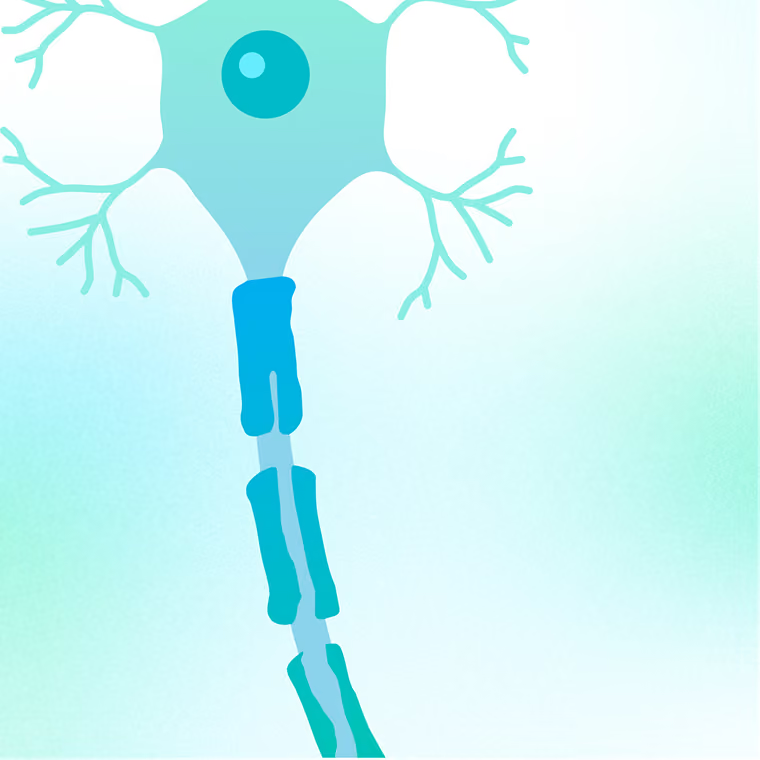
Reduced
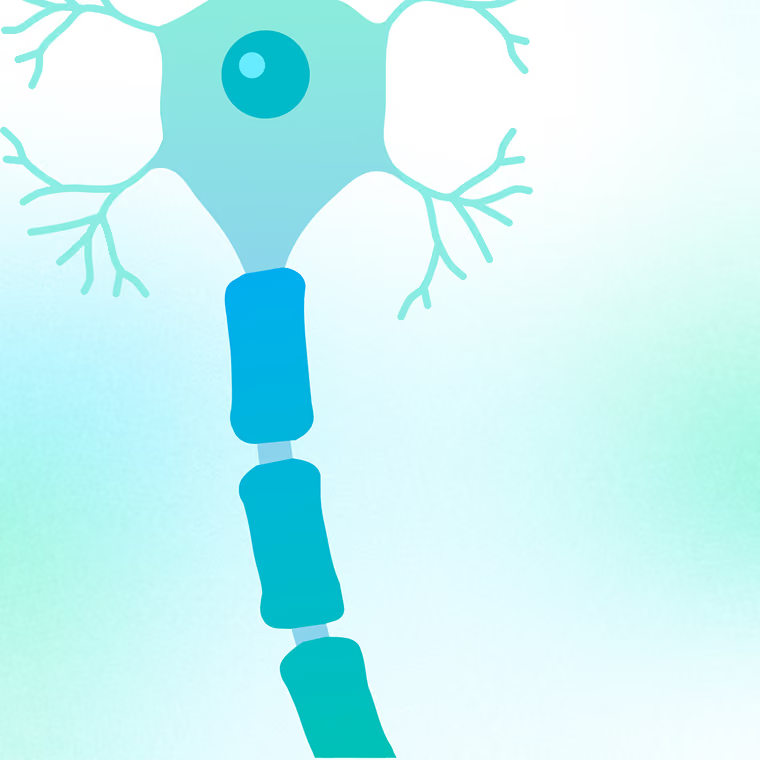
Optimized

The Parley difference
Enjoy conversations again
Discreet–you don’t have to wear anything
No maintaining or charging a physical device
Quick–just 30 days of treatment
Founded by the team who discovered the mechanism
Parley spun out of the Klug Lab at the University of Colorado Anschutz Medical Campus - the #5 medical research university in the world and home to 15% of all active U.S. clinical trials. The founding team has decades of auditory brainstem and biotech operating expertise and published the research proving a causal mechanism for central hearing loss in the brain. Now they’re bringing that research to people who need it.
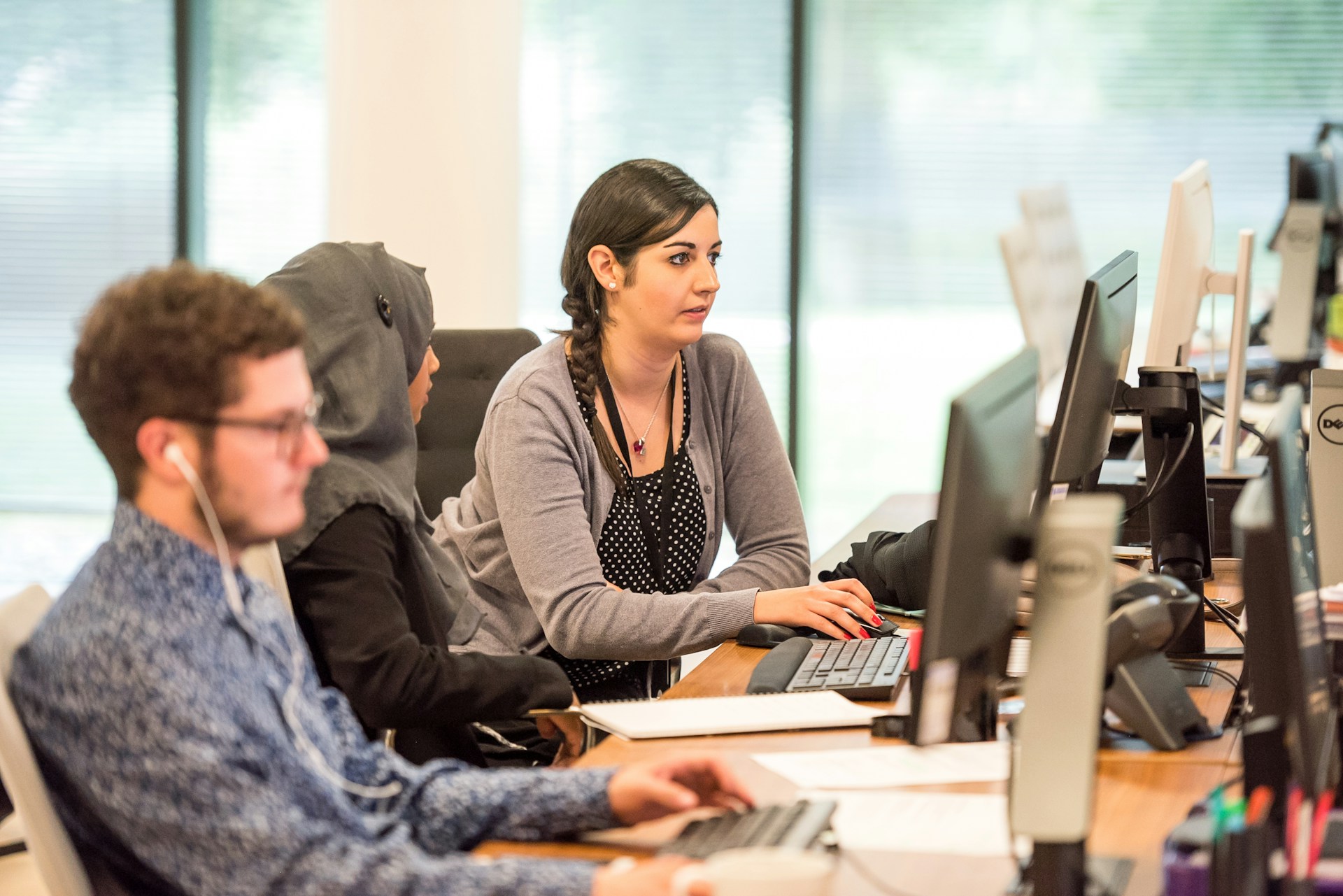
Are you losing conversations in noisy rooms?
Phase II volunteer enrollment is open at CU Anschutz Medical Campus.

Are you a Montana ENT or audiologist?
Be among the first clinics in the country to offer LOOT