The science of central hearing loss - and how we reverse it.
Identifying the pervasive hearing problem without an established treatment
In a crowded restaurant, conversations blur for hundreds of millions of people. The cause isn't the ears — it's the brainstem. A circuit in the medial nucleus of the trapezoid body handles the microsecond timing needed to separate signal from noise. This speed and precision comes from thick myelin wrapping neural axons in this circuit. With age, the myelin insulating those neurons thins, and following a single voice in a noisy room becomes impossible.
Meet LOOT: The first therapy targeting the neurological root cause.
Localized Oligodendrocyte Optimization Therapy (LOOT) is a 30-day combination of targeted audio stimulation with a repurposed, previously FDA-approved, oral medication. Together, they prompt the brain to repair the myelin sheaths in the auditory brainstem that have worn down with age.
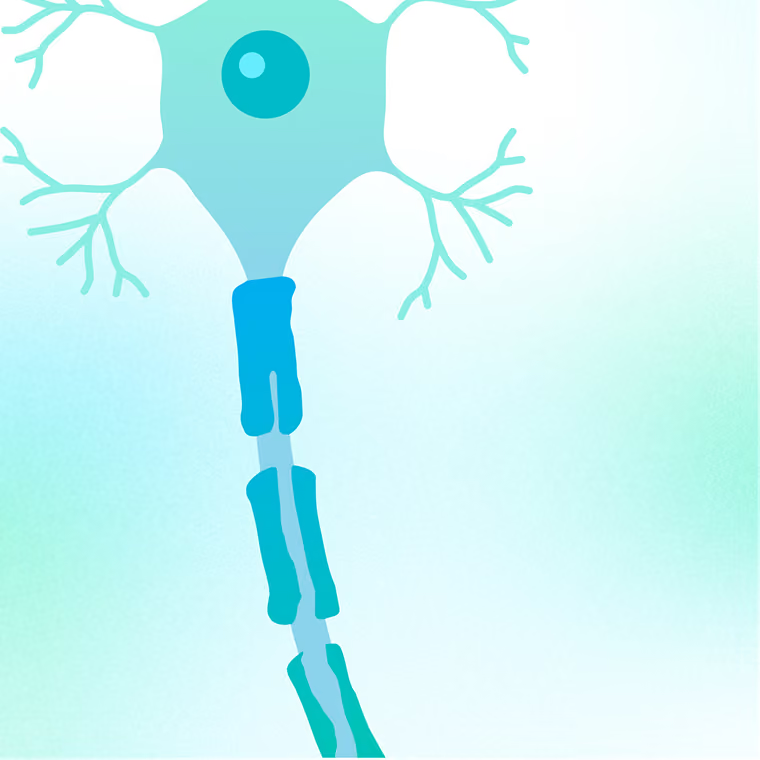
Reduced
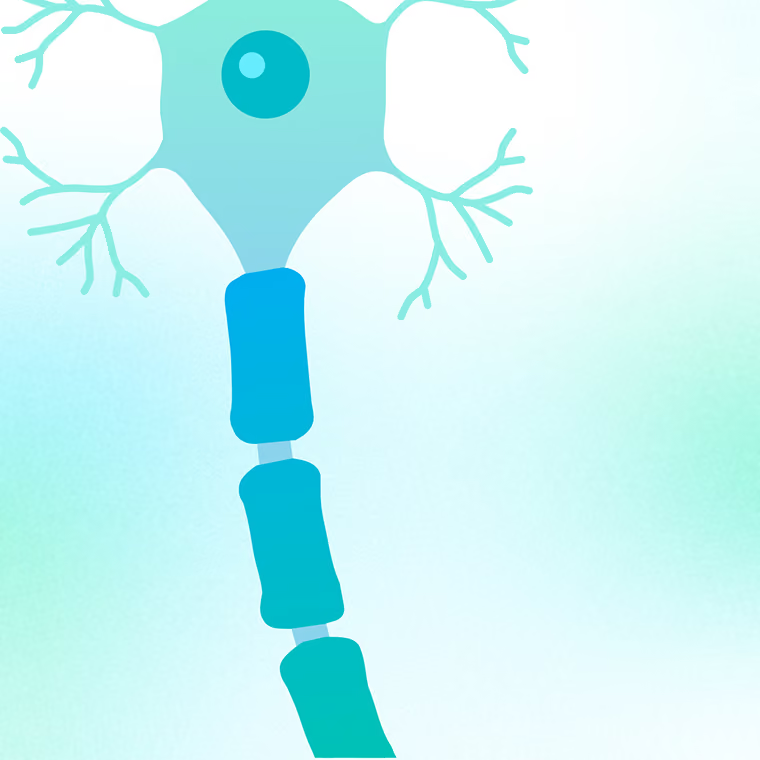
Optimized

How LOOT Works
Targeted audio therapy
Patients listen to precisely engineered soundscapes through consumer-grade headphones. The audio is designed to drive the specific brainstem circuit that has lost myelin, signaling to local oligodendrocytes that more insulation is needed. However, sound alone did not heal the circuit in preclinical studies, as the stem cells responsible for making myelinating cells are not behaving normally in CAPD.
Oral clemastine fumarate
Clemastine is a decades-old, FDA-approved antihistamine with a well-characterized safety profile. At a higher dosage, evidence is mounting that it also promotes oligodendrocyte precursor cell (OPC) differentiation into mature Oligodendrocytes: the cells that lay down new myelin. On its own, it does nothing for hearing in preclinical investigations. Paired with the audio stimulus, preclinical studies suggest it primes the OPCs to enable the brain's natural repair response in exactly the right place.
Neither component works alone. The combination is what's patented, and it's what produced ~90% reversal of age-related central hearing loss in our preclinical animal studies.
30 years of research. One causal mechanism. ~90% reversal in animals.
Selected publications
from Parley’s team
Poleg, S. et al. Age-related myelin deficits in the auditory brainstem contribute to cocktail-party deficits.
Li, B-Z. et al. Computational model for synthesizing auditory brainstem responses to assess neuronal alterations in aging.
Sammeth, C.A. et al. Degradation in binaural and spatial hearing as a function of aging.
Li, B-Z. et al. Predicting the influence of axon myelination on sound localization precision. Frontiers in Neuroscience,
McCullagh, E.A. et al. Editorial: Alterations in the sound localization pathway related to impaired cocktail-party performance.
Are you losing conversations in noisy rooms?
Phase II volunteer enrollment is open at CU Anschutz Medical Campus.

Are you a Montana ENT or audiologist?
Be among the first clinics in the country to offer LOOT